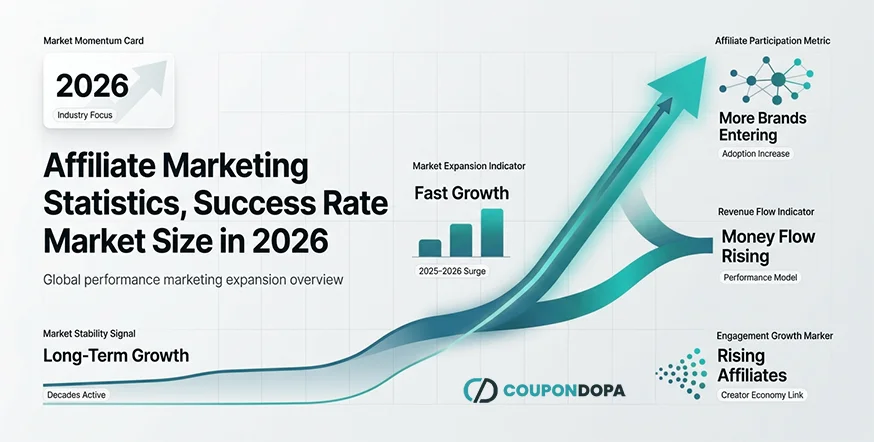
Affiliate marketing has been around for decades, but the numbers coming out of 2025 and 2026 are different from anything we've seen before. More brands are running programs, more affiliates are joining, and the money keeps climbing. Here's what the industry looks like right now.
Affiliate Marketing Growth Statistics
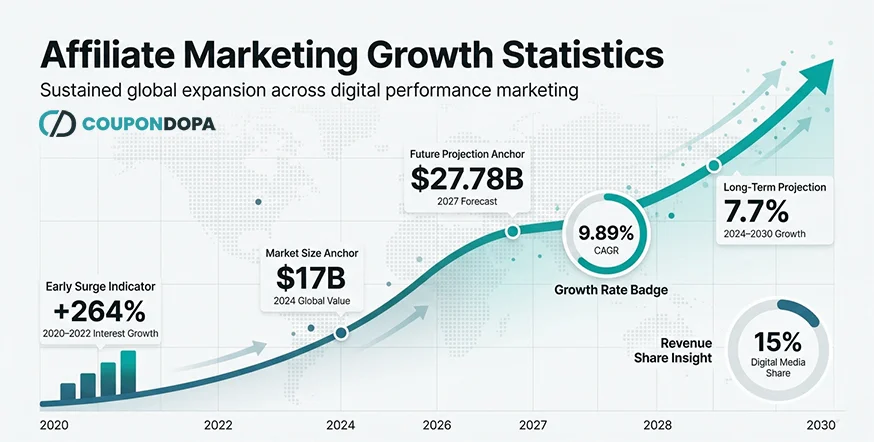
The global affiliate marketing industry was valued at over $17 billion in 2024 and is expected to reach $27.78 billion by 2027, growing at a compound annual rate of around 9.89%. Steady, consistent growth usually a better sign for long-term health than a short spike.
Between 2020 and 2022 alone, business owner interest in affiliate marketing grew by more than 264%. The pandemic pushed brands online, and many discovered affiliate programs as a cost-effective alternative to upfront ad spend. From 2024 to 2030, the industry is projected to grow at roughly 7.7% per year not a fad, just quietly getting bigger. Affiliate marketing already accounts for 15% of the digital media industry's total revenue.
Affiliate Marketing Industry Statistics
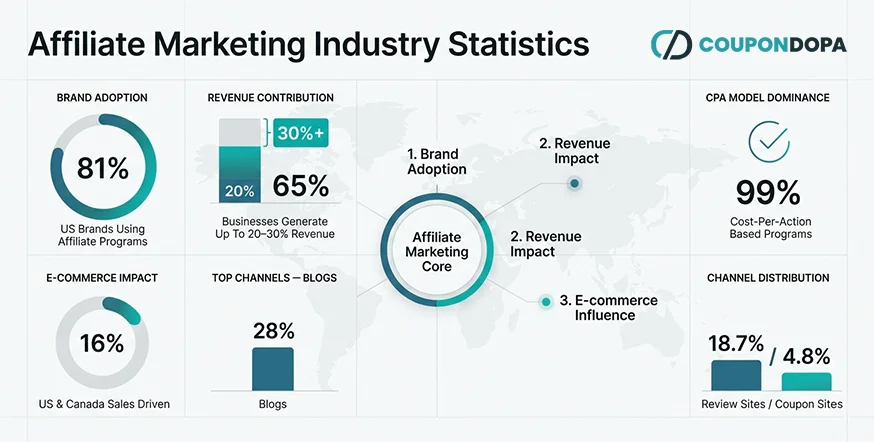
81% of US brands run affiliate marketing programs. It's no longer a niche strategy; it's close to standard practice for any company doing serious online sales.
65% of businesses report that affiliate marketing generates up to 20% of their annual revenue, with top e-commerce and software performers often exceeding 30%. The model is built on cost-per-action (CPA), used by 99% of programs; brands only pay when something actually happens, like a sale or sign-up.
Affiliate marketing drives 16% of e-commerce sales in the US and Canada. Blogs (28%) and review sites (18.7%) lead as the top affiliate channels, with coupon and deal sites like Coupondopa; these 4.8% categories are keeping growing as more shoppers hunt for discounts before buying.
Global Market Size in 2024-26 upto 2030
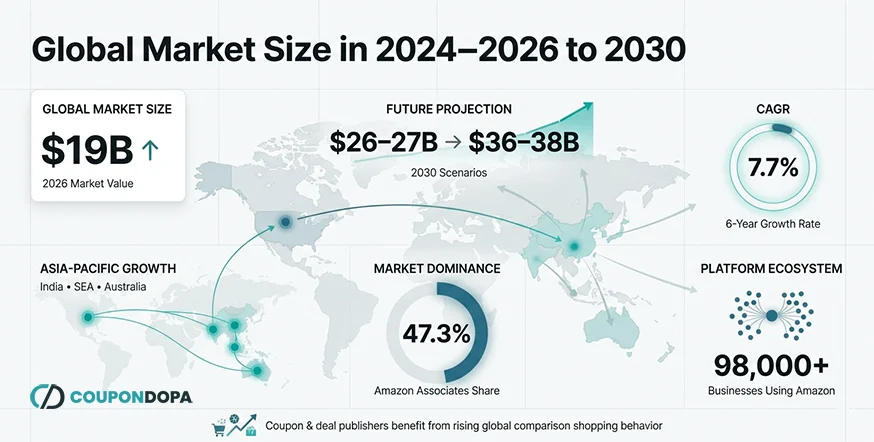
As of 2026, the global affiliate marketing market sits between $19 billion. The consensus: large, growing, and increasingly spread beyond the US. At 7.7% CAGR over 6 years, the market would reach approximately $26–27 billion by 2030. If that faster rate holds through 2030, the figure would be closer to $36–38 billion.
Asia-Pacific is the fastest-growing region, with India, Southeast Asia, and Australia seeing rapid growth in both programs and publishers. Amazon Associates alone holds 47.3% of global affiliate market share, with nearly 98,000 businesses using the program; roughly half the market runs through one company. eBay Partner Network, ShareASale, CJ Affiliate, and Rakuten are the next largest players, but none come close to Amazon's dominance.
For deal and coupon publishers, global market growth is especially relevant. As international shoppers compare prices before buying, platforms that surface verified discounts are pulling in more traffic and revenue year over year.
Affiliate Marketing Success Rate
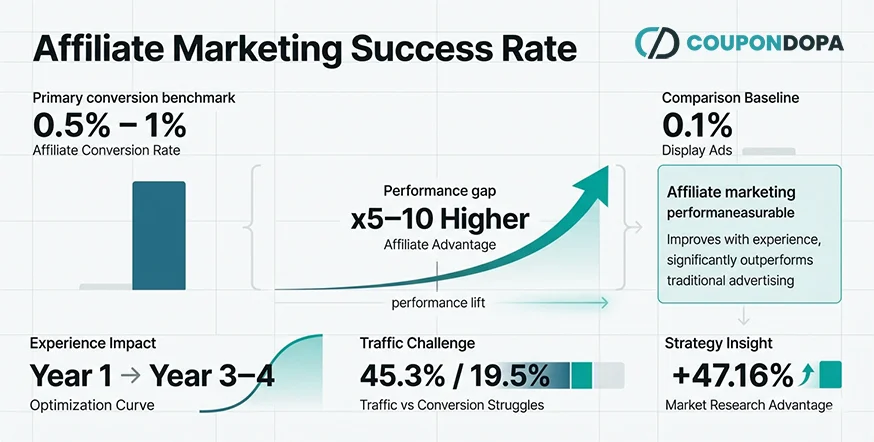
The average conversion rate for affiliate marketing is 0.5% to 1%. That sounds low, but display advertising typically converts at 0.1% or less affiliate marketing outperforms most alternatives.
Conversion rates improve meaningfully with experience. The first year is usually the hardest; by year three or four, most affiliates who stuck around have figured out what works for their audience. Traffic remains the biggest challenge 45.3% of affiliate marketers say driving traffic is the hardest part of the job, while 19.5% name converting that traffic as their primary struggle.
One underrated insight: affiliates who base product choices on market research earn 47.16% more than those who pick products based on commission rates or personal preference. Knowing what your audience wants before promoting something makes a measurable difference.
Brand & Advertiser Statistics
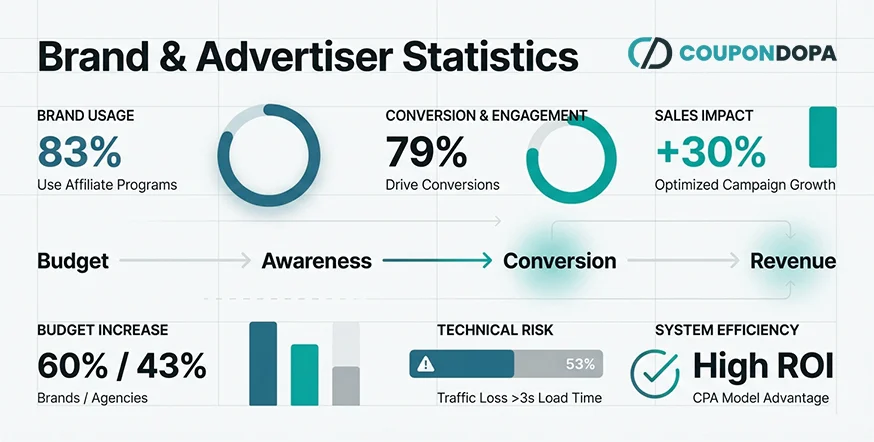
From the brand side, affiliate marketing looks like efficient use of budget.
83% of marketers use affiliate programs to increase brand awareness, not just direct sales. 79% use it to maximize conversions and drive customer engagement. Properly planned campaigns can increase sales by as much as 30%, though brands that choose the wrong affiliates or ignore fraud see far weaker results.
60% of brands increased their affiliate marketing budgets in 2023. 43% of agencies did the same. Budget growth is one of the clearest signals that something is working. One often-overlooked technical factor: if an affiliate link takes more than three seconds to load, brands and publishers lose approximately 53% of that traffic.
Publisher & Affiliate Statistics
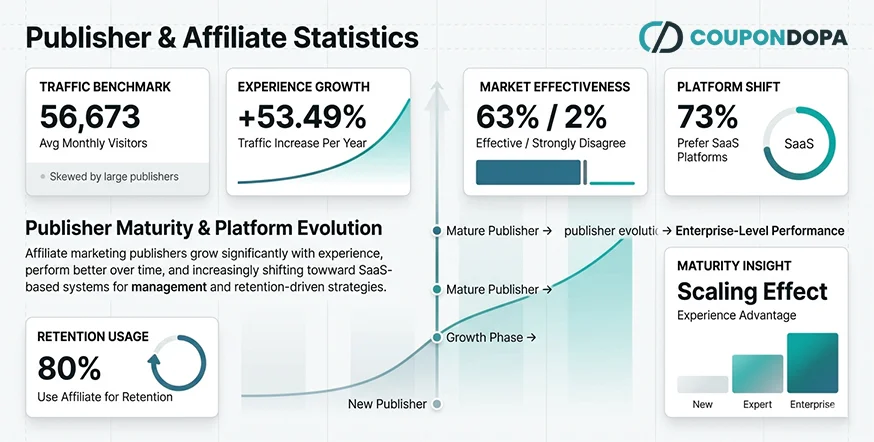
The average affiliate marketer's website gets about 56,673 monthly visitors, though that mean skews high due to large publishers. According to Most affiliate insights the newer ones, have much smaller audiences.
Every additional year of experience adds an average of 53.49% more traffic. An affiliate five years in isn't just a little better than a newcomer they're often operating in a completely different league. 63% of affiliate marketers say the channel is effective for acquiring new customers, with only 2% strongly disagreeing.
73% of marketers now prefer SaaS platforms for managing affiliate programs over traditional networks, thanks to better tracking and cleaner dashboards. And 8 out of 10 marketers use affiliate programs for customer retention, not just acquisition an underrated but highly effective use of the model.
Affiliate Fraud & Risks
Fraud is a real problem that doesn't get talked about enough.
Ad fraud costs the global digital advertising industry an estimated $100 billion per year across all channels. Around 17% of affiliate traffic is estimated to be fraudulent in some form. The most common types include cookie stuffing (planting tracking cookies on users who never clicked), fake leads, click farms using automated bots, and coupon abuse involving unauthorized discount codes.
The brands most at risk run high-commission programs with little oversight. The fix isn't to avoid affiliate marketing it's to use proper attribution tools, audit your affiliate list regularly, and define clear terms for what counts as a valid conversion.
Future of Affiliate Marketing
AI is already changing how affiliates create content. More publishers are using AI tools to produce comparison articles, review roundups, and deal pages at scale which increases competition for rankings. Affiliates who add genuine value, real testing, and actual expertise will outperform those who just add volume.
Influencer affiliate programs are growing fast. Brands are shifting away from flat-rate sponsorships toward performance-based deals where influencers earn commission on actual sales. First-party data is becoming critical as third-party cookies phase out, pushing serious programs toward server-side tracking and first-party integrations.
The rise of buy-now-pay-later, social commerce, and live shopping is creating new affiliate opportunities in new places. Coupon and deals platforms are especially well-positioned as consumers become more price-conscious and comparison shopping becomes default behavior before checkout, sites that surface verified promo codes keep attracting high-intent traffic.
Trends in Affiliate Marketing 2026
-
AI content is everywhere: the affiliates standing out are those adding real opinions, product testing, and genuine expertise. Google's quality guidelines have pushed harder against thin content.
-
Niche sites outperform general ones.: A site focused entirely on pet supplies or home coffee equipment converts better than one covering everything. Audiences trust specialists.
-
Video is a growing affiliate channel: YouTube and TikTok now drive significant affiliate traffic. Short-form video with affiliate links in the description has become a real revenue stream for creators.
-
Recurring commissions are gaining traction: SaaS and subscription programs that pay monthly as long as the customer stays subscribed are popular with both affiliates (passive income) and brands (incentive to bring quality customers).
-
Deal and coupon traffic keeps rising: More shoppers search for discount codes before completing a purchase than ever. That behavior drives consistent, high-intent traffic to coupon platforms daily.
How Many Affiliate Marketers Are There?
Estimates put the number of affiliate marketing companies and agencies worldwide at between 9,600 and 10,000 as of 2026. Individual affiliates number in the millions globally Amazon Associates alone has hundreds of thousands of active publishers.
In the US, around 11,400 people do affiliate marketing as their primary job. The number doing it as a side income is far higher and growing every year.
How Much Can You Earn as an Affiliate Marketer?
The range is wide. Most beginners earn nothing for the first several months building traffic takes time, and without traffic there are no commissions.
The median annual income for affiliates active for a year or more is roughly $20,000 to $80,000. Top affiliates running large content sites or high-traffic comparison tools can earn $100,000 to $500,000 or more per year, with a small number exceeding $1 million annually.
The highest-paying niches are finance (sometimes $100–$500 per referred customer), SaaS with recurring commissions, health and wellness, and luxury goods. Coupon and deal affiliates earn through volume lower per-transaction commissions, but millions of daily searches for discount codes add up to real revenue.
Conclusion
Affiliate marketing continues to grow because it benefits both businesses and consumers. Brands get more sales through performance-based marketing, while shoppers increasingly compare prices and look for discounts before making a purchase. This growing demand has also made coupon and deal websites more important than ever. If you're looking to save money on your online purchases, Coupondopa helps you find verified coupons and promo codes from popular stores, making it easier to get genuine discounts. Whether you're shopping regularly or only during sales, checking it first can help you avoid paying full price.
FAQs
What percent of affiliate marketers are successful?
If success means a full-time income, probably under 5%. If it means consistent income at all, around 15–20% of those who stick with it for more than a year.
What is the failure rate of affiliate marketing?
Around 80–95% overall, but that includes everyone who signs up and never posts a single link. Among people who actively build content for 12+ months, the failure rate is much lower.
What is the average conversion rate?
Between 0.5% and 1% for most campaigns. Affiliates with experienced, targeted audiences see 2–5% on well-matched product recommendations.
Is affiliate marketing still worth it in 2026?
Yes, but it's more competitive than five years ago. Standing out requires a loyal audience, a specific niche, or a platform built around genuine utility like a deals or comparison site. The market is still growing, budgets are increasing, and consumers are clicking affiliate links every day.
What are the highest-paying niches?
Finance, SaaS, health and wellness, luxury goods, and online education. Coupon and retail programs pay lower per-transaction commissions but compensate through high traffic volume.